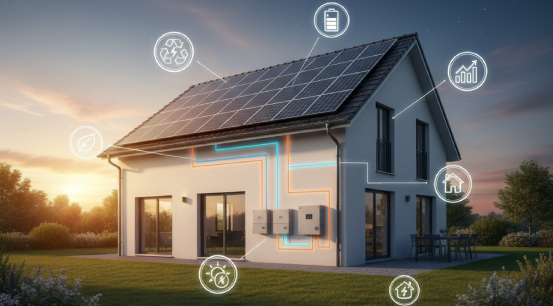
Solar energy is emerging as a reliable and sustainable alternative for powering homes and businesses. It is based on simple principles, yet these are often misunderstood. Here are the essential concepts to fully understand how it works and why it matters.
1. What is solar energy?
The sun emits natural energy that photovoltaic panels convert into electricity. This electricity can either power devices directly or be stored in batteries for later use.
2. Photovoltaic panels
Each panel is made up of silicon cells. These cells capture sunlight and generate a direct electric current. A panel's efficiency depends on the quality of the cells, their orientation, and the amount of sunlight received.
3. Inverter
The inverter converts the direct current produced by the panels into alternating current, which is compatible with the electrical grid and household appliances. It is a central component of the system.
4. Peak Watt (Wp)
The peak watt measures the maximum power a panel can produce under ideal sunlight conditions. For example, a 300 Wp panel produces 300 watts in full sun. It serves as a reference for estimating installation capacity.
5. Self-consumption
Self-consumption means using the electricity your solar installation produces directly. Any surplus energy that is not used can be stored in batteries or fed back into the grid. This approach helps reduce dependence on the electricity provider.
6. Storage Battery
It stores excess energy to release it when production drops, such as at night or on cloudy days. The battery’s capacity determines the system’s autonomy. Today, lithium-ion models are the most efficient.
7. Hybrid System
This type of installation combines solar energy with another electricity source, such as the grid or a generator. It ensures continuous power supply, even during low sunlight conditions.
8. Factors Affecting Production
• The orientation and tilt of the panels
• Ambient temperature
• Cleanliness of the panel surface
• Level of sunlight
Regular cleaning can improve efficiency by up to 10%.
9. Advantages of Solar Energy
• Reduced electricity costs
• Partial or total energy independence
• Renewable and silent energy source
• Low maintenance over many years
• Increased value of homes or commercial buildings
10. Solar Energy and Air Conditioning
Pairing an inverter air conditioner with a solar installation allows cooling without overloading the grid. This combination optimizes consumption and ensures lasting comfort. ADTF offers solutions tailored to this type of integration.
Solar energy represents a responsible investment. It provides increasing autonomy and contributes to the ongoing energy transition. When well understood, it becomes a long-term economic and ecological asset.